Beyond Visual · Blog
Digital Showroom vs. Physical Model: Cost, Speed and Sales Impact
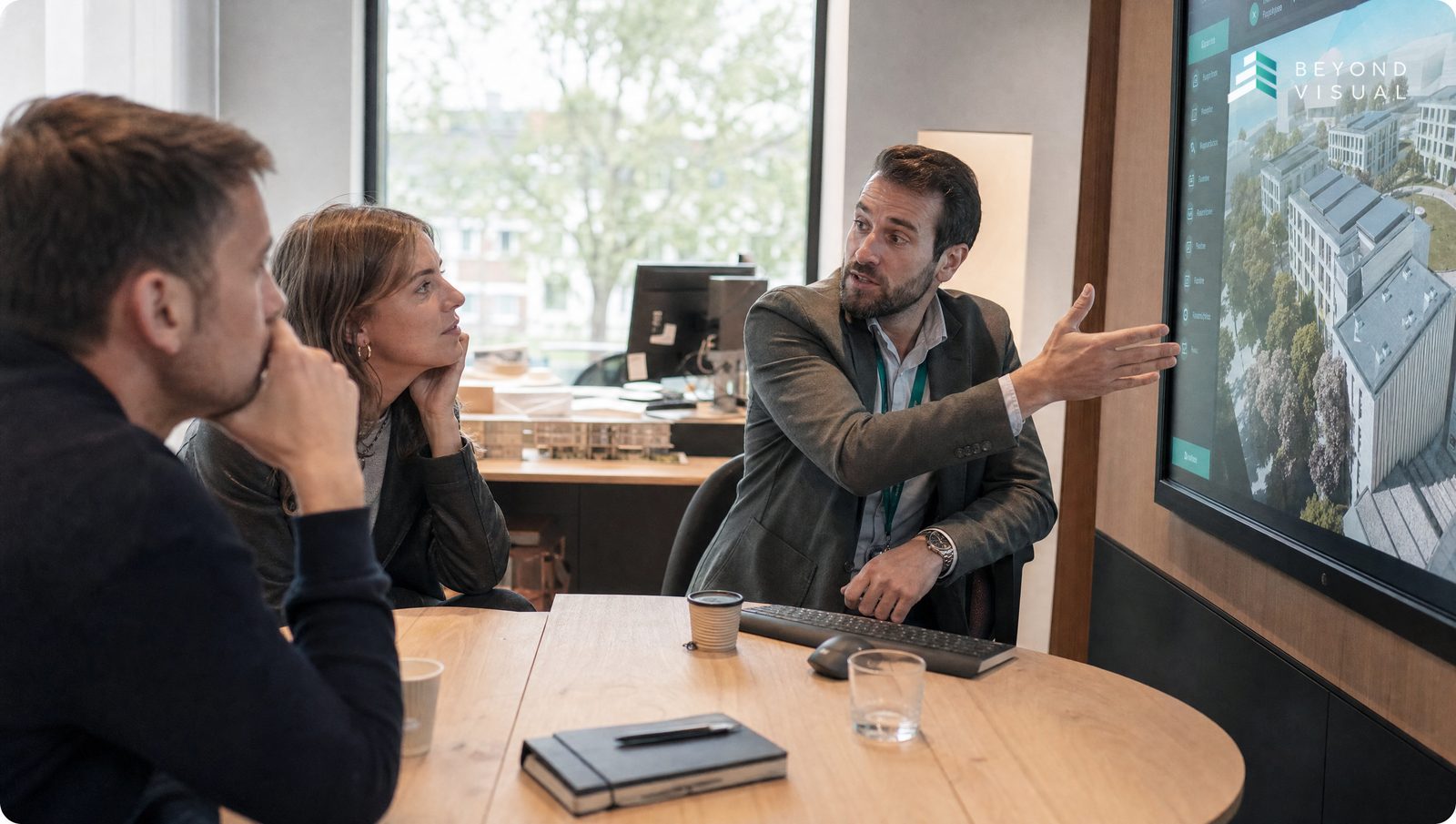
Every developer who has ever built a physical scale model remembers the invoice. Weeks of lead time, a five-figure cost, and a beautiful object that is out of date the moment a floor plan changes or a phase sells out. It sits in the sales office under a perspex cover, and buyers lean over it politely. Then they ask to see inside a specific apartment, and the model has nothing to say.
The physical model isn't wrong. It's just frozen. A digital showroom does the same job of making a development feel real, but it stays alive: it updates, it goes inside the units, and it travels. Here's how the two actually compare on the things that matter to a developer.
What does a physical model really cost?
The sticker price is only part of it. A large scale model runs into the tens of thousands, takes weeks to build, and captures a single moment of the design. Change the façade, split a unit, or launch phase two, and you're either living with an inaccurate model or paying to rebuild it. It also exists in exactly one place. Buyers who can't come to that room never see it.
What does a digital showroom cost?
A digital, interactive 3D showroom has a different shape of cost: more of it is in the build, almost none of it in staying current. Design changes are edits, not reconstructions. Sold units flip to sold in real time. And the same system runs on a touchscreen in the sales office, on a video wall at an expo, embedded on your website, and over a video call, from one source of truth. You're not paying per location or per revision.
The difference buyers feel: getting inside
This is where the gap is widest. A physical model shows massing and context beautifully, but a buyer can't stand in the living room, look out the actual window, or watch the afternoon light move across the floor. A digital showroom can. The moment a buyer stops looking at a building and starts moving through their apartment is the moment the sale gets easier, and that moment simply isn't available in acrylic.
Speed and flexibility
Launches move fast and plans change. A digital system keeps up: new renders, revised layouts, updated pricing and availability go live the same day. Your sales team is never explaining away a model that no longer matches the brochure, and every channel shows the same current picture.
So is the physical model dead?
Not quite. A striking physical model still has a place in a flagship sales gallery as a centrepiece, a first impression, a thing to gather around. The mistake is asking it to do the selling. Let it set the scene, and let the digital showroom answer the questions, go inside the units, and follow the buyer home. In practice, the developers getting the most out of their sales space use the digital system as the workhorse and treat the physical model, if they build one at all, as decor.
The short version: a physical model is a beautiful snapshot; a digital showroom is a living tool. One captures a moment and stays in one room. The other updates instantly, goes inside every unit, and reaches buyers wherever they are, for a cost that isn't multiplied by every revision and every location.
Questions developers ask us
Is a digital showroom cheaper than a physical model?
It depends how you count. The bigger difference is what happens after launch: a physical model costs money every time the design changes or a phase sells out, while a digital showroom updates as an edit. Across a full sales campaign, the digital system usually wins on total cost and does far more.
Can a digital showroom really replace the model in the sales office?
For the selling itself, yes. Buyers can explore the masterplan and go inside individual apartments on a touchscreen or video wall. Many developers keep a physical model as a centrepiece but run the actual sales conversation on the digital system.
What happens when the design or pricing changes?
You update the digital showroom and every channel reflects it immediately: the sales office, the website, expo screens and video calls. There's no rebuild and no risk of showing buyers an out-of-date model.
See it in action
Beyond Visual builds the interactive 3D and web-based sales systems developers use to sell off-plan faster.
Book a demo